Research
My research sits at the intersection of infectious disease epidemiology, quantitative modeling, and genomics. I develop statistical and mechanistic models to understand how infections spread and how interventions can be designed to stop them, drawing on large-scale clinical, genomic, and environmental datasets.

Antibiotic use and resistance
antimicrobial resistancestewardshiphealth-system data
Understanding how antibiotic use drives resistance is essential for designing effective stewardship. Using clinical and genomic data from the US Veterans Affairs Healthcare System (about 1 million patients across 138 medical centers) and the Calgary Health Region (about 25,000 isolates), I have characterized nationwide trends in infection incidence and antimicrobial resistance, and developed statistical models of how prescribing selects for resistance in major bacterial pathogens.
Selected work
- Pham TM et al. (2026). Antimicrobial selection and multidrug resistance in four major pathogens in the US Veterans Affairs health-care system. The Lancet Microbe. doi:10.1016/j.lanmic.2026.101445
- Pham TM et al. (2024). Trends in infection incidence and antimicrobial resistance in the US Veterans Affairs Healthcare System (2007–22). The Lancet Infectious Diseases. doi:10.1016/S1473-3099(24)00416-X
- Pham TM et al. (2026). Trends in incidence and resistance for five major causes of bacteremia in a Canadian metropolitan area, 2006–22. medRxiv, under review. doi:10.64898/2026.08.27.26361471
Environmental exposures and tuberculosis
air pollutionpanel regressiontuberculosis
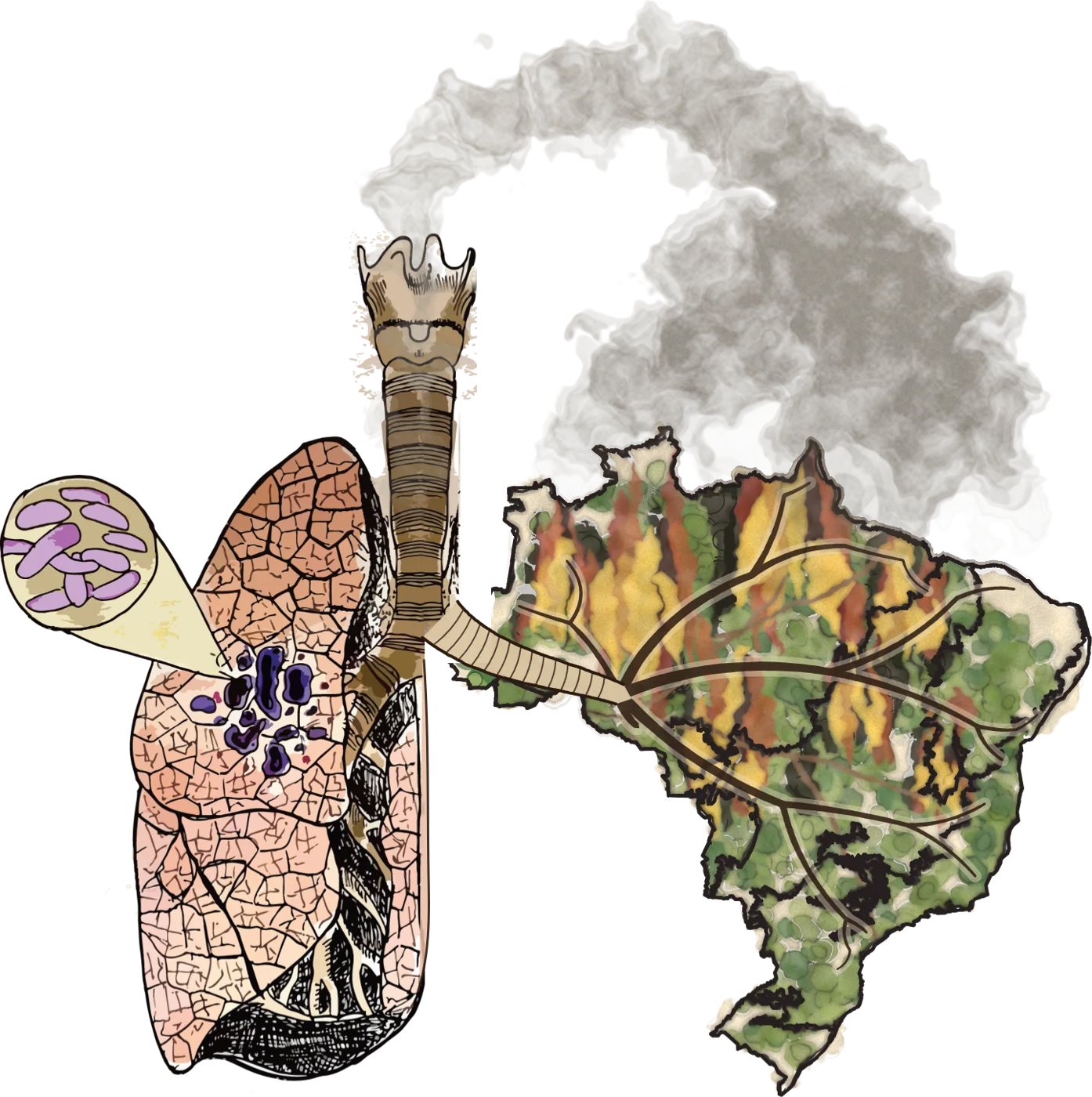
At the University of Utah, I study how environmental factors shape infectious disease dynamics. Using Brazil’s national TB surveillance data (more than 1.7 million cases, 2003–2023), I develop panel regression models that quantify how ambient and wildfire-related air pollution affects tuberculosis notifications, and models of the seasonality of TB. This work integrates meteorological, air quality, and epidemiological data across a country with enormous geographic and socioeconomic diversity.
Selected work
- Pham TM et al. (2026). Impact of wildfire-related fine particulate matter on tuberculosis notifications in Brazil: a nationwide panel study, 2003–2023. medRxiv, under review. doi:10.64898/2026.07.01.26356762

Transmission dynamics and genomic epidemiology
mechanistic modelsBayesian inferencepathogen genomics
A central thread across my work is using mathematical and statistical models to inform infection prevention and control. During the COVID-19 pandemic, I developed agent-based and compartmental models that directly informed policy: an agent-based model of SARS-CoV-2 transmission in Dutch secondary schools supported re-opening strategies for the Netherlands Ministry of Education, and statistical models of hospital-acquired COVID-19 contributed to the UK’s Scientific Advisory Group for Emergencies (SAGE).
My PhD focused on nosocomial transmission of Pseudomonas aeruginosa in intensive care units, combining surveillance data with transmission models to quantify routes of spread, including environmental contamination after discharge. More recently, I have used genomic epidemiology to distinguish local transmission from importation of SARS-CoV-2 in the National Basketball Association, and I am developing models to estimate the size of M. tuberculosis transmission bottlenecks.
Selected work
- Cooper BS, Evans S, Jafari Y, Pham TM et al. (2023). The burden and dynamics of hospital-acquired SARS-CoV-2 in England. Nature. doi:10.1038/s41586-023-06634-z
- Pham TM et al. (2021). Interventions to control nosocomial transmission of SARS-CoV-2: a modelling study. BMC Medicine. doi:10.1186/s12916-021-02060-y
- Teslya A*, Pham TM* et al. (2020). Impact of self-imposed prevention measures and short-term government-imposed social distancing on mitigating and delaying a COVID-19 epidemic. PLOS Medicine. doi:10.1371/journal.pmed.1003166
- Pham TM et al. (2022). Routes of transmission of VIM-positive Pseudomonas aeruginosa in the adult intensive care unit. Antimicrobial Resistance & Infection Control. doi:10.1186/s13756-022-01095-x